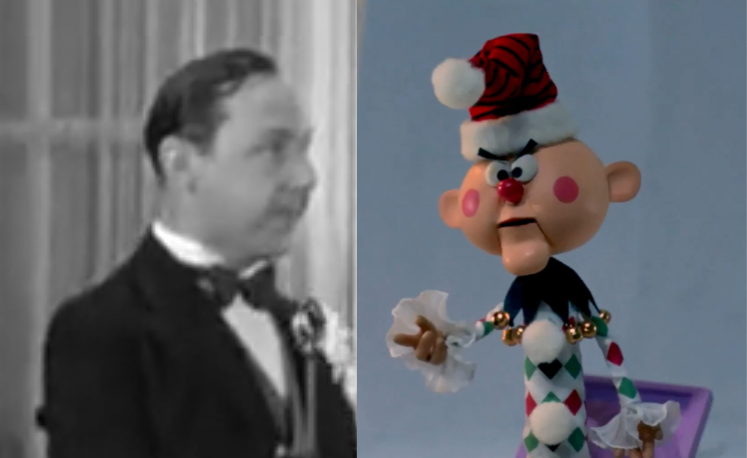
After viewing the star-studded International House” (1933), I’m more convinced than ever that Franklin Pangborn is the inspiration for the Rankin-Bass puppet “Charlie in the Box” from “Rudolph the Red-Nosed Reindeer.” Pangborn was a comedic character actor who often played prissy fussbudget roles. I learned from this video that he served with the 312th Infantry in WWI and was gassed and wounded at the Battle of Argonne. That must have meant mustard gas, which was a truly heinous weapon of war that often left lasting impairment. Fortunately he seems to have been spared.
Pangborn reportedly was gay in real life, and appears in “gay-coded” roles, making his screen debut in 1926. As such, subsequent “in plain sight” gay actors like Paul Lynde and Charles Nelson Reilly stand on his shoulders. Just as today’s out actors stand on theirs.
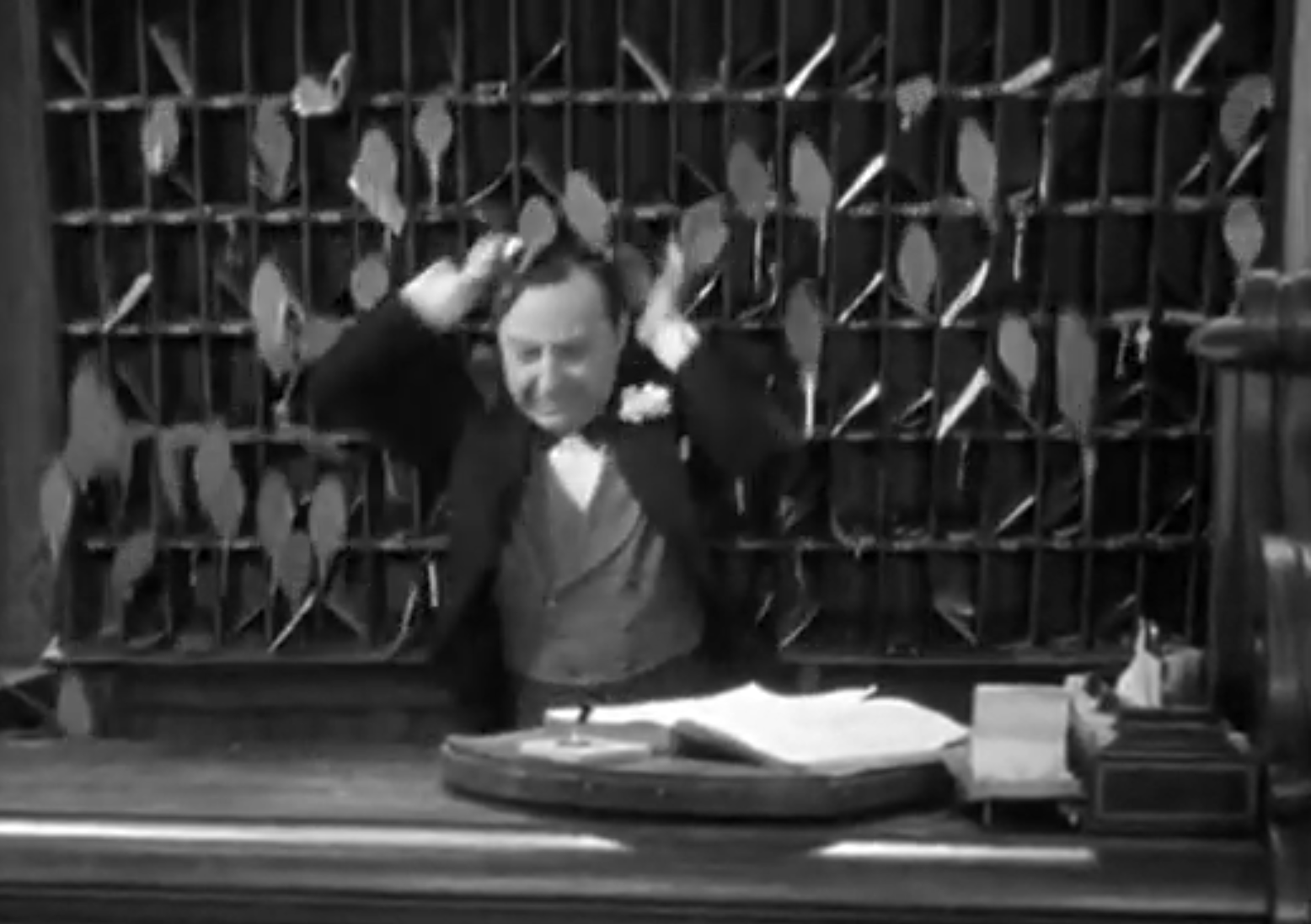
Often overlooked is his brilliant comedic timing. Two examples from “International House.” First is his hilarious flailing and barely-controlled panic as a hotel clerk whose cubbyhole rack is about to topple over:
Second is his rapid emotional switching during this scene (occurs at 1:00:30 of this video) where he changes from an obsequious tone while speaking to a doctor, to a fussy dismissive tone when speaking to an underling:
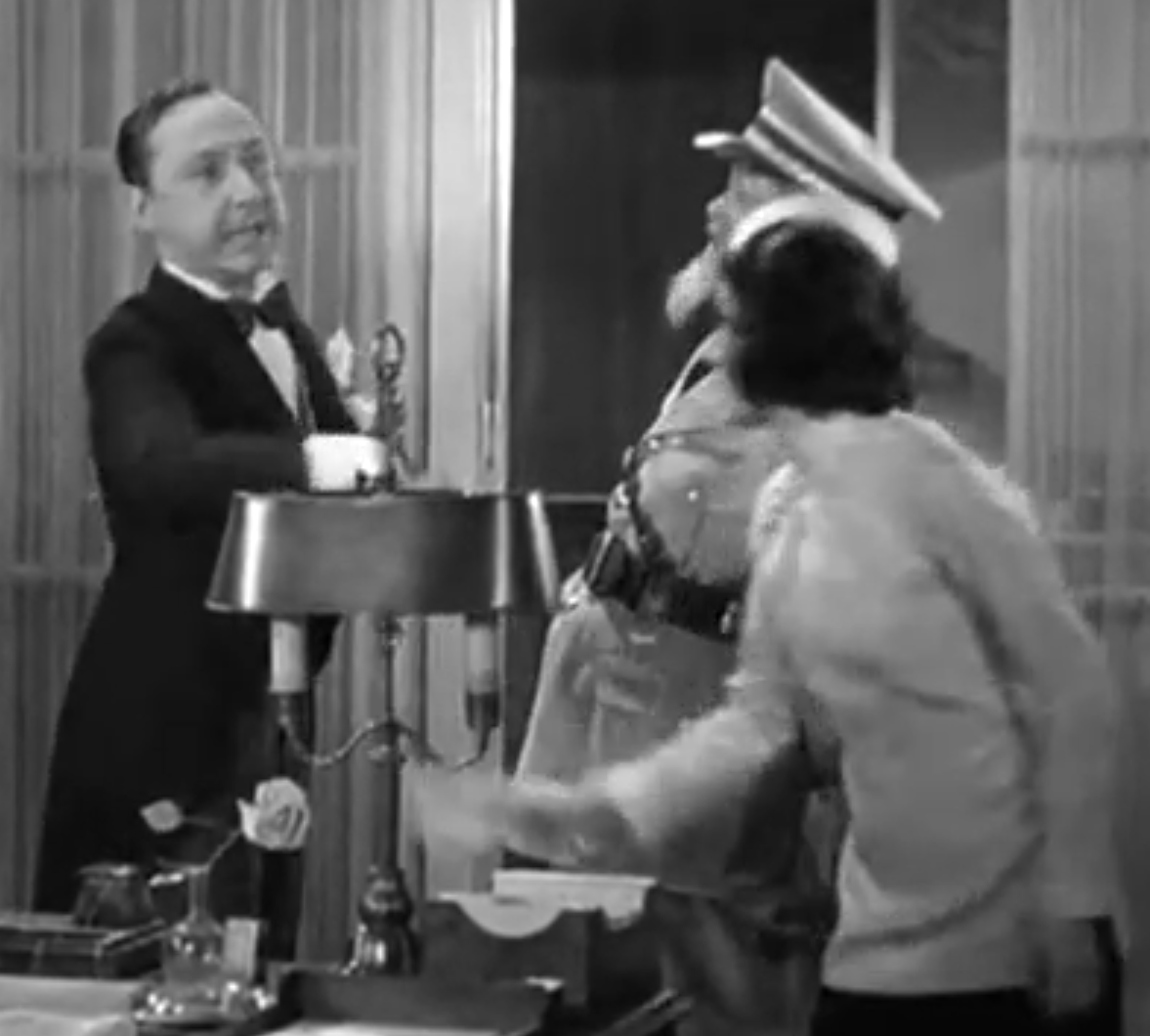
A lot of comic actors use this technique, Will Ferrell for example. But in their case the switch is the point, here the switch is incidental to the character. Pangborn does not pause, does not milk a laugh, he moves on to his next line.
Why is it that with the freedom today, modern tv comedies so often fall back into the gay-coded tropes? Shows like “Modern Family” and “Will and Grace” feature gay characters that drip with sass and sibilant “S’s.”

Pangborn seems more opaque in comparison. An exception to this overall trend was Billy Crystal’s character in “Soap” who was not broadcasting fabulousness. I think it’s just an easy, hacky way to get a laugh. This can be seen as a more coded presentation than occurred in the 30’s, and is an exception to the trend that film characterizations get less stereotypical over time.