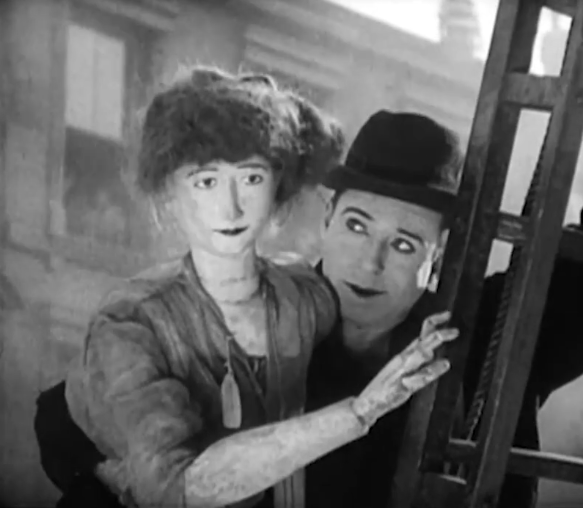
Not enough people know about Harry Langdon, considered one of the “Big 4” silent film comedians (Chaplin, Keaton, Lloyd, Langdon). He’s utterly bizarre and far less accessible than his contemporaries, to the point where he has become the subject of post-modern analysis, and interpreted through deconstructionist theory. His physical slapstick and cross-dressing has been viewed through the lens of trans body. So what’s going on?
Lorenzo Tremarelli, in Film Theory, describes Langdon as “creating a semiotic void”, who “detaches the signifier from its expected signified”. He does this by flouting the contemporary film tropes, for example he is known for using an extended pause in holding reaction shots of his face. “This is the brilliance of his prolonged stare: he provides the signifier (his face) but refuses to provide the signified (the emotion), forcing the audience into a state of semiotic crisis.” (Lorenzo Tremarelli, Film Theory, March 6, 2026“).
I think this is absolutely correct. A lot of my writing is about the unspoken conventions of film, and how they enforce a version of the world that upholds the social contract, while purporting to free the audience from the drudgery of everyday life (Hollywood Dream Factory). I’ve discussed this in the context of horror films, how they would simply be unwatchable without the filmic touches that soften the grisly acts central to their plots.
I’ve also talked about it in terms of phony dialog: quippy, or overly expository. I’ve maintained that the crude semiotics of silent films (Keystone Kops, Perils of Pauline) offer a greater freedom for actors and directors to be creative – a simpler more fixed template compared to the seamless baked-in norms of modern movies, which become harder and harder to identify as we assimilate to them.
Examples: Chaplin kissing Jackie Coogan on the mouth in “The Kid”. The convention is love for children, Chaplin made it reverential (having just lost his own child) rather than “referential” – something like the adult character calling the child “buddy” and high-fiving them, which references sentiment without showing it.
Also Garbo cradling John Garfield’s head and stroking his hair in “Flesh and the Devil”.
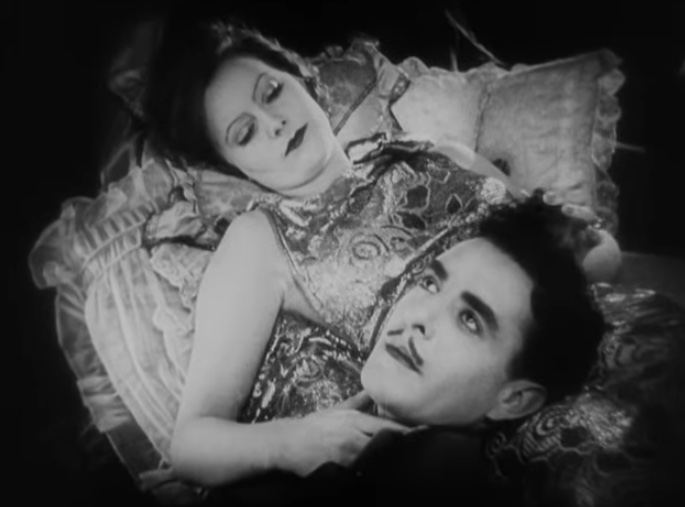
This is a casual liminal act, without dialog, somewhere between passion and familiarity. Modern movies would have them side by side in bed saying something like “Well Mr. Taylor, I do believe I’m starting to develop an aversion to being without you.” And I don’t think today’s films are the worst. Movies from the 40’s and 50’s are oppressingly stylized.
Langdon purposefully makes us uncomfortable. Ella Tucan in her “One Movie Blog” describes him as “the most helpless, immature, sexless, timid and downright stupid of all the silent clowns” and “a middle-aged baby” (Harry Langdon: The Elderly Baby, March 15, 2014). This wasn’t accidental and it wasn’t because Harry Langdon, the performer, was stupid. He fired Frank Capra, the director of his most popular movies, because of Capra’s crowd-pleasing sensibilities (Pauline Kael described his movies as “Capri-corn”). He was a seasoned and popular vaudeville star who was interested in a darker vision
Beyond his Lacanian anti-Otherness, Langdon simmered with a barely-repressed “Id”. the Id is described as an organism’s “basic instinctual drives that are present at birth…. governed only by the pleasure principle”.
I think the prime example of this occurs in one of his first feature length films “Tramp Tramp Tramp”. It’s a straight up “get the girl” redemption story. Bumbling son Harry wins cross-country race to save his family business, and wins the hand of a young Joan Crawford, no less. Yet the final scene, seems utterly separate from the rest of the film, Freshly married Harry and Joan look in on their new baby infant, and the audience is presented with this spectacle:
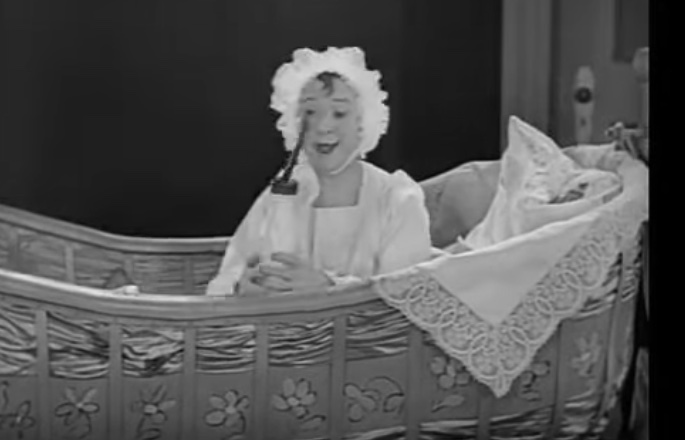
A full-grown Harry Langdon, frolicking in a bassinet with a baby bonnet on his head. Gumming a teddy bear and a ball, then suckling on a baby bottle with a long tube that evokes an enema bottle. This is stylistically jarring, seems tacked on. Langdon frees his id, and thumbs his nose at Capra’s pieties.
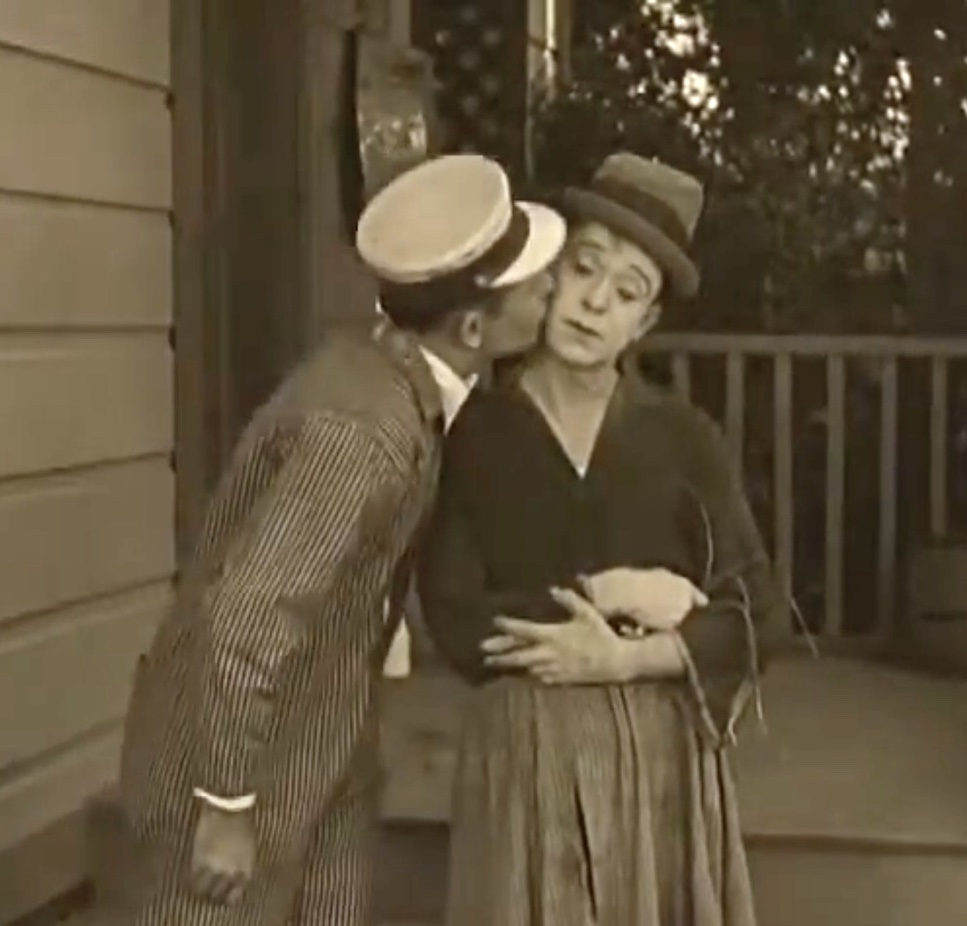
Ella Tucan further describes Langdon as “a combination of clown, infant, and hermaphrodite”. He is conventional masculinity’s worst nightmare: hapless, confused, vacant, seemingly gender-fluid. In “The Chaser” one of his self-directed films, he switches roles with his wife, and ends up being forcibly kissed by various deliverymen.
At the slightest sign of stress his fingers find his mouth.
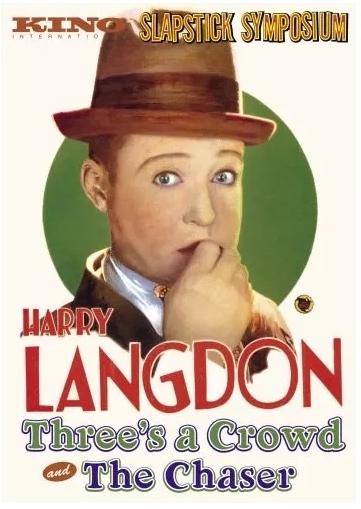
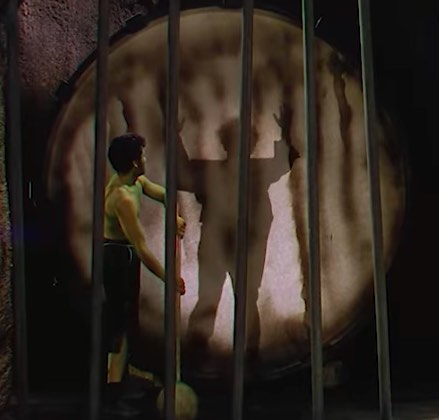
What distinguishes him from Stan Laurel, with whom he’s often compared, is Langdon’s complexity and unpredictability. Laurel can predictably be counted on to screw things up and then cry. Compare that to Langdon inventing a strong man routine on the spot in front of a hostile crowd in “The Strong Man” (1926).
Pauline Kael quotes James Agee as saying Langdon looks “”as if he wore diapers under his pants.” here is an aggression in this, just as there is an aggression in clowning. His refusal to reassure, to engage in normative male behavior. Keaton, Chaplin and Lloyd were always following the script of self-improvement. Langdon, the true clown, looks as if he would just as soon shit himself, put on a dress, and suck on a baby bottle. A different kind of heroics.