Booking from Facebook

facebook_logo1.jpg

An interesting factoid from life in the advertising trenches concerns the social media habits of teenagers: Coca Cola, anxious to jump on the social networking bandwagon, commissioned a study of teenagers that found their core attitude towards developing a social media presence to be “defensive”.  That is, they felt at risk for losing social status if they did not have an online identity which displayed the proper combination of coolness and connections.  This study further characterized todays teens as overscheduled and stressed.  The agency’s response to this research was to whip up a campaign based on the fizzing sound as a can of coke is cracked open.  Pressure relieved and now you have a minute to yourself.  Not a bad treatment for what it’s worth.

Does this attitude occur in adult social media consumers? Steve Tuttle’s article “Why I Quit Facebook”, along with some other commentary I’ve seen recently, focuses on the banality of “status updates”, short posts where users share whatever thoughts are crossing their minds at the moment.  To me, the subtext of these self-centered messages is a strategic attempt to bolster an online persona and, by reflected LCD-light, increase the status of the user.

In real life, at a party for example, the person who corralls me to tell me that their kid ate an entire bowl of cereal would properly be deemed a “bore”and would be most-likley avoided.  A status-updating (and status-enhancing) Cyberbore faces far fewer consequences than their flesh-and-blood counterpart because they are easier to ignore, and because, in my humble opinion, there is a tacit understanding that posts to newsfeeds are not intended to establish connection, they are intended to advertise.   Although there are token updates in which users wanly express non-hegemenous attitudes, the vast majority of posts hew tightly to a woman’s magazine Weltanschaung: “Joanie just did 2 hours of Bikram and never felt so refreshed, Namaste!”.

I have even seen meta-updates to friends about the number of friends obtained:  “John Doe just added friend number 1,000!”.  This is Onkga’s Big Moka,  writ in pixels. –  the display of a fitness indicator, a cyber-peacock’s-tail. The poster not only indicates that they have the social capital to get 1,000 people to click “Accept”, but they have the energy and focus to monitor and broadcast this.

It’s nothing new that people are always advertising and cloaking their intent in normative memes (“community” or in Huffington’s case, “concern for family”).  The interesting question to me is: “Is this an efficient form of self-promotion?”  I don’t think so.  While some people invest a lot of effort in creating online personas, the audience is fickle.  In order to join an online community, the average user faces a relatively low cost of admission and can leave just as easily.  As the founders of Friendster can attest, and with apologies to  “Project Runway”:  “In social media one day you’re in, the next day you’re out”.  This is the nature of the internet itself, low investment with rapid-switching (e.g. hyperlinking).

OK, let’s investigate fashion as an analog.  Is it a more efficient means of advertising fitness?  It takes energy to seek out fashionable clothing, resources to obtain it, and resilience to withstand the social attention and occasional opprobrium one obtains from wearing it.  It’s an effective fitness-indicator albeit one with greater investment and a lesser reach.  Alternatively the impact of a social media presence is broad but shallow. It seems to me that maintaining a fashionable real-life persona takes greater sacrifice, affects fewer people, but affects them more deeply.  Critiques about the banality of fashion precede those of Facebook posts and probably arise from a similar anxiety – keeping up.  Most people don’t want the pressure of figuring out what is in fashion, or of persuading
1,000 people to electronically approve of them.

The establishment of an enduring community on the internet would require that a social networking mechanism demand greater investment by users, and impose real consequences for their non-participation or departure. Entry would have to be more akin to a barn-raising than to watching Google Auto-Fill complete an online registration form. In real-life communities based on shared sacrifice, such as a farm communities, self-promotion is often viewed with skepticism.  Perhaps the emergence of this attitude is a bellwether for the viability of online communities as well.

World’s Fair-y Tale

 dupont2.jpg

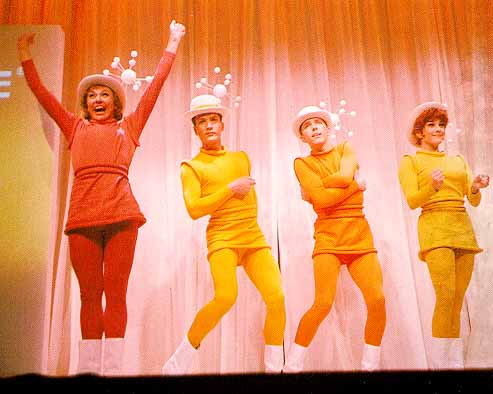
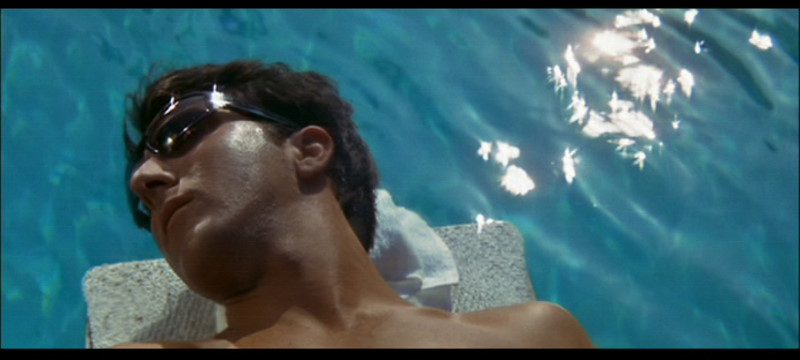
The 64-65 World’s Fair marks the crossing of a cultural Rubicon. In 1965 DuPont Corporation sponsored an exhibit called the “Wonderful World of Chemistry”, featuring a musical with a song called “The Happy Plastic Family”. Two years later, in 1967 the movie “The Graduate” was released, with the famous exchange:

I just want to say on word to you,just one word.

Yes, sir.

Are you listening?

Yes I am.

Plastics.

the-graduate-pdvd_014.jpg

(Dustin Hoffman underplays it the whole way.)

From 1965 to 1967 the concept of plastics was shifting from hopeful to ominous. Today we are faced with a giant floating island of plastic debris in the North Pacific, twice the size of the Continental United States. You turn away and hope that some solution will be found or you will be dead before it becomes a big problem. Imagine, then, not only not worrying about the impact of new chemicals, but actively celebrating it. Imagine GM’s “Wonderful World of Tomorrow” ride which took people on a tour of ecosystems, from desertscape to moonscape, to underwater diving bell, each fantastic and hopeful.

Robert Moses, the organizer of the 1964-65 World’s Fair, broke ranks with the governing Bureau of International Exhibitions, by demanding that participating countries pay exhibition fees. The BIE instructed their member countries not to attend, and the result was a fair dominated by Third World countries, with Spain and Vatican City being the only major exhibitors. Commercial interests filled the void. The ’64-65 World’s Fair marked the point at which corporations finally superceded nations in the Western cultural consciousness. Never again would plastics seem as innocent.


PBR

I will survive

I haven’t been writing much in this blog because I always try to get everything perfect and be so smart, which puts up a huge barrier to me posting.  So my New Year’s Resolution is more dumber posts.  Let’s get started….

Went to Madison Square Garden last Saturday to see the Professional Bull Riders Association rodeo.  Despite the 12 tons of dirt that had been dumped on the hockey rink it was smaller than I would have thought.   It also was shorter timewise and with surprisingly little drama, since there were no teams or stories, just occasional 8 second bursts of a rider trying to stay on a bucking bull.

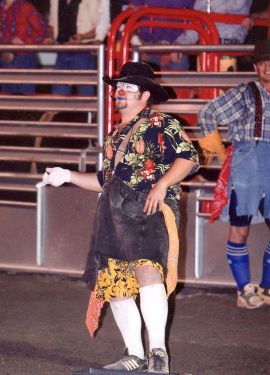
Those 8 seconds were exciting but there were gaps, which were filled by the announcer and a rodeo clown with a headset mike who would do things to grab the audience’s attention, such as moonwalk, jump on a barrel, lipsynch to Gloria Gaynor’s “I Will Survive”, and dance to Beyonce’s latest hit.  In other words some very GAY or BLACK things were going on there to keep the audience entertained, which intrigued me, in that this last bastion of redneck culture (the national anthem was preceded by a group prayer and a shoutout to our troops) turns out to be beholden to black and gay culture – if only they would give credit.

The miked clown seemed to be on meth and made me nervous. This scene made me think of the how a lot of QVC announcers seem to me to be closeted gay men.   The identity dissonance that results from being closeted, can lead to a perfectionism that translates easily to “presenting” and product.  That’s my theory.  Gays in Middle America are often more civic-minded than their hetero counterparts, they provide more of the “social glue” within communities, yet they operate tacitly, never truly accepted.  I’ll never forget my gay landlord and his husband in Toledo OH serving me gourmet pigs-in-blankets.  A scene brilliantly recreated by Christopher Guest as Corky St. Clair in “Waiting for Guffman”

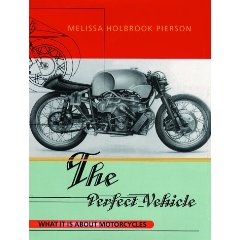
“The Perfect Vehicle – What is it about motorcycles?” – No gas

039331809501_aa240_sclzzzzzzz_.jpg

“The Perfect Vehicle – What is it about motorcycles?” by Melissa Holbrook Pierson.

I was prepared to love this book, I guess I am prepared to love a lot of things: it’s the story of an overthinking new motorcycle rider just like me. Unfortunately it reads like a combination of an extended airline magazine article and a series of diary entries with all the good bits cut out.

The influence of Pierson’s husband, writer Luc Sante, is found in the presence of many historical sidebars about motorcycling, but these lack the narrative flow and focus on personal details that make Sante’s writing so compelling.

Piersen prevaricates about her personal life. I appreciate her writing honestly about heartbreaks, but there is little introspection on why things went wrong and what her role was in it, other than that her family was not affectionate . She meets Luc and a sentence later they are married.

Often the language she uses sounds overconstructed, phrases like “loath even though I am, to share my toilette with arachnids”. Who talks like this? It’s writing for effect, rather than writing honestly. Pierson does have an  important story to tell: “I also worked on trying to make peace with a secret, not too conscious wish to find someone who would take care of my-bike-and-by-extension-me, because I discovered in this a dangerous futility that only served to keep alive in me a pervasive sense of incompetence.”…”I began to sense that my motorcycle was again trying to tell me something, this time something ancient and wise….’Captain your own ship’. Ah thanks.” (p. 182, paperback).

That’s the emotional core of the book and it never gets developed. In its place we get pages of reprinted letters from the Moto Guzzi National Owner’s Club News. In the end “The Perfect Vehicle” takes a wrong turn.

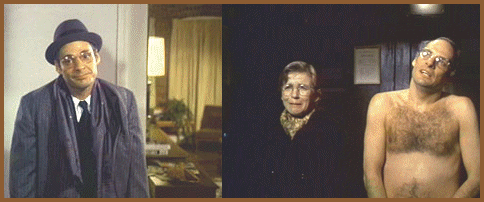
“Where’s Poppa”: When farces plod.

wsp.gif

I was prepared to love “Where’s Poppa”, it features the nexus of Normal Lear sitcom character actors who, when I was growing up, felt like extended members of my raisenette-sized broken nuclear family. How fun it would be to see censor-free Barnard Hughes, Vincent Gardenia, Ron Liebman, Rob Reiner, and a pre-SNL Garret Morris.

But alas,”Where’s Poppa” drags. It’s claustrophobic and plodding, and breaks the cardinal rules of farce, lightness of mood and a fast pace.

The plot involves the efforts of a lawyer (George Segal) to rid himself of his overbearing Jewish mother, who lives in his gigantic New York apartment. Along the way we are exposed ridiculous characters and situations: a comedic group of muggers who repeatedly mug the brother of the main character, the rape of a policeman which involves the use of a gorilla suit and subsequent gay love, Ruth Gorden pulling down Segal’s pants and biting his ass as he serves her dinner. Why doesn’t this work?

Part of the explanation is the sense of doom engendered by the cramped, dark interiors and antique set-decoration. I absolutely eat up cinematography of New York during this era, but watching this movie felt like I was leafing through the Police Gazette in a dark bus terminal.

The main reason though is the slow pace. Modern MTV-style quick cuts have changed what moviegoers feel is a comfortable editing tempo, but, even taking this into consideration, camera shots are held for an excessively long time. Plot developments are also very slow. There is one situation in which this works: a weird love song George Segal sings to Trish Van Devere, softly, very close to her face, and for an excruciatingly long period of time. It reminded me of those cringeworthy extended shots in the British version of “The Office”, where you find yourself mentally begging the camera to cut away, and at the same time you can’t stop looking.

Sadly, most of the film is more “hurry up” than “can’t look away”. Which made me wonder if it’s possible to have a black comedy that is also a farce. The dilemma is that the gravitas of the subject matter in a black comedy tends to weigh down lightness of the farce. Movies like Robert Altman’s “M*A*S*H” and Kubrick’s “Dr. Strangelove” prove that it can be accomplished.  They do this not only through speed but also through entertaining subplots,  something “Where’s Poppa” neglects.

Although the film features multiple, stereotypically-funny characters, almost all of them are directly involved in the central drama of how to deal with the recalcitrant mother. The scenes featuring Garret Morris and the Central Park muggers are as close as the viewer gets to a mental break. The muggers seemed almost Shakespearean, following the tradition of comic ne’er-d0-wells. If the rest of “Where’s Poppa” had clung a little more closely to stage tradition it would have been a better film. Edgier isn’t always better. It’s as if all these talented actors and the director Carl Reiner, were taking a short sabbatical before the creative maelstrom of the 70’s .

Random notes: After stealing Ron Liebman’s clothes, the muggers mention Cornel Wilde’s “The Naked Prey” (1966), a great action movie that was a stylistic precursor to 1968’s “Planet of the Apes”.

As politically incorrect as he was, it’s disquieting to learn about the death of an action hero as formidable as Charleton Heston. Linda Harrison, who played “Nova”, Taylor’s mute mate, said that James Fransicus, in the sequel seemed to be cute and tiny compared to Heston.

Chicago 10: Gen X’er gets the 60’s wrong

abby.jpg

1968-born director Brett Morgan makes two excellent choices in creating “Chicago 10”: to avoid the use of 60’s songs in the soundtrack, and to employ a fluid style of animation for much of the picture. Ultimately though he proves himself to be unwilling to grapple with the complexities and emotional underpinnings of the events of the 1960’s, and the result is a mashed-up documentary without a point of view, rather than a serious film.

In a “Fresh Air” interview, Morgan explained that because the anthemic music of the 60’s has been so thoroughly co-opted by Madison Avenue, he could no longer use it in the movie. He’s right. Imagine hearing “Revolution” by the Beatles while watching documentary footage of a protest march: it’s only a matter of time before the Nike logo appears. Morgan instead employs modern music, although it’s a stretch to say that the Beastie Boys and Rage Against the Machine are truly contemporary.

The near 3-dimensional animation used throughout the film is detailed enough to allow you actually look into the character’s mouths, but it serves the traditional reductive purposes of puppetry: to take the audience out of context, to remove the prejudices inherent in viewing human actors, to symbolize reality rather than portray it. These opportunties are squandered. Instead, 70’s-sitcom-viewer Morgan uses animation as a comic counterpoint to the harsh documentary film footage of the Chicago riots.

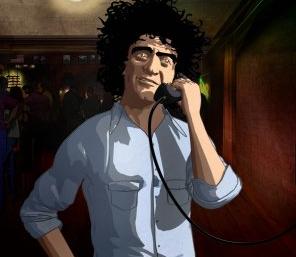
From time to time the totemic potential of using animated characters emerges though. Watching a cartoon Abbie Hoffman doing stand-up short-circuits all those “oh god it’s political stand-up” thoughts, he is free to function as a greek chorus, commenting on the action in the courtroom that took place earlier that day.

But for the most part “Chicago 10” fails to provide context. There is brief footage of the announcement of Martin Luther King’s death, but no sense of the the reasons for the worldwide social changes that were coming to a head in 1968, and no in-depth examination of the burgeoning youth demographic as it realized the moral bankruptcy of the old guard.

Morgan makes no attemp to reconcile the urgent protests of 1968 with the Sarandon/Mumia/Earth-First watered-down antiwar protests of today.   Imagine how energized Iraq war protests be if there were an active draft and big daily casualty counts like there were in Vietnam.  Jim Crow laws were in effect a up until the mid-60’s. “Loving vs. Virginia” was a court case that ended race-based restrictions on marriage. It was decided in 1967.

“Chicago 10” inadvertently minimizes the legitimacy of opposition to these injustices by focusing on the antics of the defendants. We don’t see the pain and frustration of a real human beings. Instead we see the Yippies descend on a city officials office and threaten to put LSD in the city water if they aren’t given the permit they want. Grainy film footage of cops wielding billyclubs substitutes for the more complicated social grievances rather than symbolizing them. Similarly the much-touted courtoom shackling of defendant Bobby Seale at the hands of a deliciously insidious Judge Julius Hoffman functions as a calculated shorthand for addressing racial injustice, which is absent elsewhere in the film.

It’s unreasonable to expect a single fim to capture the complexity of the 60’s, but “Chicago 10” doesn’t come close. Director Morgan, a child of the 70’s, babies the audience, using the animated sequences for emotional relief when the documentary footage gets frightening or boring. He puts the drama in a courtroom where he knows there is only farce. Opportunities for real drama abound: in the latter part of the film there is footage of Allen Ginsberg deciding, as he talks, whether or not to go on a prohibited march where there may be violence. What would you have done? What if you had just been drafted? And why did this idealism die? Why did this gritty passion get swept away into the Pina Colada 70’s?

Credit needs to be given to Brett Morgan for addressing this time in history. And to Roy Schieder for his wonderful voiceover of Julius Hoffman. But in the end “Chicago 10” doesn’t even rise to the level of received wisdom, it’s received footage.

On vacation

roy_cat_small.jpg

The Krapmeister is on vacation for the first time in a loooong time, which is not a Calvinist brag, more a reflection of the vacationphobia spawned by my parent’s many (unsuccesful) “save the marriage” vacations. That and the fact that, like a cat, I’m a creature of habit.

I’m very much enjoying waking up without the blinding, painful yak flash of my “to do” list. I have worked out twice here, which is exactly how often I worked out in February, so I’ll soon be ready for the “World’s Strongest Man” competition.

Another white woman has a baby – Critics drool over slack “Juno”.

juno.jpg

What is it about any movie that shows a hip white woman bringing her baby to term that causes film critics to temporarily lose their minds? “Knocked Up” was given a free pass and Juno is inspiring some of the worst film criticism I’ve ever seen.

The truth is that “Juno” is a calculatedly juvenile film with an immensely appealing main actress (Ellen Page), fake meta-dialog, and an inability to follow-through on its central theme of abandonment.

Juno is constructed so as to allow moviegoers to feel as if they’ve gone through a significant emotional journey, without doing the work. One way it blunts serious emotions is through the use of hipster patois in the place of real dialog. Rob Harvilla, a music critic with the Village Voice described this best:

“Teenagers who talk like thirtysomething screenwriters. “Cool” parents who talk like teenage screenwriters. A 16-year-old heroine who actually says things like “Just looking to secure a hasty abortion!” and “Just dealing with things way outside my maturity level!” and (grits teeth) “Swear to blog!”. Just appallingly cute cute cute CUTE CUTE.”

The cutesy dialog has been universally panned in reviews, but its also serving to throw critics off serious discussion of the film’s major shortcomings. A.O. Scott in the New York Times:

“…not many are so daring in their treatment of teenage pregnancy, which this film flirts with presenting not just as bearable but attractive. Kids, please! Heed the cautionary whale. But in the meantime, have a good time at “Juno.” Bring your parents, too.”

Scott cannot resist writing in a similar style to the dialog, in fact thinking in this teenage way. “Heed the cautionary whale. But in the meantime, have a good time at “Juno.” I don’t know anyone personally who has brought a pregnancy to term and given up her baby, but I can imagine it’s a lot more painful and less attractive than is portrayed in Juno. No amount of squiggly animated fonts and warbly hypersincere outsider-style singing can make up for that fact, and pretending otherwise is the opposite of daring.

At one point in the film, after he adoptive couple has seen their relationship dissolve, the character Juno gives voice to the main point of the movie. She says something like: “I just want to know that love can last. That two people can love each other and it’s not going to go away.” A movie-sequence childbirth follows, then a shot of Juno saying she does not want to see her newborn, followed by a single tear coursing down her face. Cut to a postpartum Juno, happily riding her bike, spitting wisecracks and singing twee duets, with the afraid-of-his-own-shadow Paul Cera.

I’m not being a moralist here, I don’t want to see the character Juno punished for giving up her baby. But it’s an unsatisfying experience to have the main theme of the movie evaporate, and to instead be fed a dose of indy candy rather than a resolution, or at least a coherent point of view. Critics have responded to this shortcoming by either ignoring it – offering, as Scott does, a blithe positive assessment of the films earnestness, or else, as Stephanie Zacharek does in Salon, constructing tortuous “filmic” criticism:

“Juno” is partly about the necessity of making choices for ourselves, but it’s also about knowing when we need to accept help from others. That idea is never spelled out in so many words; it comes through in the actors’ faces. “Language is the house man lives in,” Jean-Luc Godard told us, borrowing from Martin Heidegger, in “Two or Three Things I Know About Her.” There are lots of words in “Juno.” But in the end, it’s really all about language.”

OK I’m going to let the royal “we” pass. Her evasive argument reminds me of “cold-readings” by psychics, who employ verbal tricks to keep their marks engaged: “you’re a shy person, but if it’s something you care about you have strong opinions, although you mainly keep them to yourself, but when the chips are down…” Zacharek’s version is: “it’s all about language, but not the talking kind, but instead the kind you find in actor’s faces, when they are letting you know they need help, which is really what it’s all about, just ask Jean-Luc Godard, when he borrows from Martin Heiddeger.”

Anything to keep abandonment at bay.

Perhaps it’s a zeitgeist thing, there seems to be a generalized post 9/11 anxiety about the future of mankind, for example the spate of recent movies about apocalyptic threats to
civilization (cf. “Cloverfield”, “I am Legend”). Combine this with role-uncertainty created by modern decisions to delay childbearing (cf. Lori Gottlieb’s article “Marry Him” in the Atlantic Monthly), and the result may be that a simple squiggly-lined movie about a young woman’s lack of anxiety in futhering the human race has an appeal that is irresistable. Just not to me.

Swear to blog.
Lumet loves Lattices: The Pawnbroker

thepawnbroker1.jpg

(photo from K. Silam Mohammad’s lostintheframe.blogspot.com)

lumetgrid.jpg

“The Pawnbroker” stars Rod Steiger as a Holocaust survivor who becomes a pawnbroker in Spanish Harlem in the early-60’s. This places the action 20 years out from WWII, roughly the same time that has passed since the first Desert Storm — not a long time.  It must have been even more powerful to see this harrowing film in the 1960’s than it is today.

Steiger has a sheer presence that makes minor quibbles, like his hard-to-place accent, inconsequential. The weight of experience is so heavy upon the main character, Mr. Nazerman, that he can only respond to people in the most perfunctory manner. All social niceties have left him. Thus when the pimp who is laundering money through Nazerman’s pawnshop mockingly calls him “Professor”, Nazerman simply hangs up the phone. Or when a junkie, trying to sell a gimcrack radio, berates him as a “filthy blood-sucking kike”, he barely glances up as he replies “Still at the same address?”. Seeing this disregard for social convention is a guilty pleasure, like watching Michael Imperioli of The Soproanos pull out a gun in order to get faster service in a donut shop. It brings you over to Nazerman’s side, a dangerous place to be, because when the emotions do come out, they will be titanic.

Lumet uses grids and latticework as a symbol of confinement throughout the film: the metal protective metal grid inside the pawnshop, often casting shadows on the characters, the fancy cross-hatched room divider in the pimp Rodriguez’ pad, the railing on the patio of the social worker’s apartment, the barbed wire in the flashbacks to the concentration camp. And who can blame Nazerman for staying within the lines?

Ultimately though, Nazerman discovers that his business is being financed through prostitution, he flashes back to images of his wife (girlfriend?) in Nazi “Joy Division” sexual slavery, and he has a breakdown. The final scene is of Steiger plunging his hand through the sharp ticket-holder spine, then wandering the streets of Spanish Harlem, staring at his stigmata, shortly after his assistant has been killed in a botched robbery attempt.

The power of Steiger’s performance isn’t in the shaking and grimacing though, it’s in his non-reactivity. Being non-reactive is a high-status trait, and we find it intriguing that Nazerman, essentially a schlemiel who is at the behest of petty crooks, can carry himself with such authority. Perhaps we fellow schlemiels can model ourselves after him in some way.

Yet there is an underlying tension of knowing that, in order to achieve this equanimity, he must essentially kill the parts of himself that are human, and this cannot last for long. How tempting it would be for an actor of lesser stature to give up on this theme, to instead portray the character as angry or simmering, and to try to force meaning into the dialog that Steiger wisely treats as throwaway. Steiger rejects poignancy and is a master of self-control. Thus when he breaks down it is all the more terrible.

Minor notes and other gulity pleasures: Interiors are shot with that old klieg-light style that makes every character look like an escaped prisoner pinned against a prison drainpipe. The apartment furnishings inside Brock Peter’s apartment are authentic Saarinen pedestal items (Saarinen claimed he wanted to provide a “solution for clearing up the slums of legs in US homes”) and Eames chairs. Peter’s manservant looks like a photographic negative of himself, instead of a black man in white clothing it’s a white man with silver hair in black clothing, an early Andersen Cooper type.

1940’s meet the 1960’s: “Go Man Go!”

marquis_haynes.jpg

A charming time-capsule starring another charismatic but forgotten actor, Dane Clark (not the execrable Dane Cook), alongside a young Sidney Poitier, “Go Man Go!” features a bebop score by Slim Galliard, who was a favorite of Jack Kerouac. I wonder what the connection with “On the Road” is — I remember the phrase “Go Man Go” as an exhortation Sal Paradise shouted out to improvising jazz musicians.

Slim Galliard makes an appearance, playing a piano with his fingers upside down for a small gathering of Globetrotters. I love Kerouac’s description of a Galliard concert:

‘… we went to see Slim Gaillard in a little Frisco nightclub. Slim Gaillard is a tall, thin Negro with big sad eyes who’s always saying ‘Right-orooni’ and ‘How ’bout a little bourbon-arooni.’ In Frisco great eager crowds of young semi-intellectuals sat at his feet and listened to him on the piano, guitar and bongo drums.”

“…Then he slowly gets up and takes the mike and says, very slowly, ‘Great-orooni … fine-ovauti … hello-orooni … bourbon-orooni … all-orooni … how are the boys in the front row making out with their girls-orooni … orooni … vauti … oroonirooni …” He keeps this up for fifteen minutes, his voice getting softer and softer till you can’t hear. His great sad eyes scan the audience.”

What kills me is “ovauti“, it makes sense next to “o-rooni” but it’s so weird, where is it coming from? It’s perfect though.

That’s the 1950’s part of this movie, the 1940’s part consists of stereotypical interactions between Clark as Abe Saperstein, Bill Stern (as himself) a hard-bitten but honest sportswriter, and the evil Potter-like sports magnate Mr. Willoughby. The Bowery-Boys-style slang they use — “Hey ya mug! Ya gonna be a chump all your life? Of course you’re invited!” — is the direct precursor of today’s crushingly unimaginative board-room Ebonics appropriation: “Quarterly earnings doubled? Girl, go on with your bad self!”. It was probably just as hard to listen to back then.

The 1960’s part of the movie is best shown in the final scene, Abe Saperstein, arm-in-arm with the Globetrotters, walking triumphantly towards the camera, in a hopeful message of racial healing. Shades of Blackboard Jungle. I can’t recall another movie from the 1950’s that was this hopeful and unabashed about race. Today’s derivative ironic culture cannibalizes sentiment like this.

“Go Man Go” also has something to say about acting. In an early scene real-life Globetrotter “Sweetwater Clifton” speaks some lines about how he likes soda pop (the origin of his nickname). He delivers them woodenly, although with charm. This is the low end of the acting scale.

Raising the bar, Dane Clark as Abe Saperstein, shows real conviction, but he’s always hitting something when he acts. “I’m going to get us into big arenas if it’s the last thing I do!’ (SMACK). It’s as if the director fired him up before every scene (“Now this time really mean it!”) without thinking what the cumulative effect would be. Clark’s “average Joe” always seems to be in a harangue.

The best actor in the movie is Sidney Poitier, in a relatively minor role, who pops up from time-to-time to speak a few impassioned lines. He does so with quiet conviction, and having seen the other actors telegraph and flail, one gets a sense of the star quality of Sidney Poitier.

A couple of minor points about this movie: it is exemplary in showing what I like to call “old-time small basketball court syndrome”, action shot in a remarkably cramped gym. Another film that features this is “Angels with Dirty Faces” where the players are dodging trapezes and other non-basketball equipment as they play on a tiny court.

“Go Man Go” made me think of why, although everyone knows Jackie Robinson broke the color barrier in baseball, no one knows who did it in the NBA. It turns out that Charles Cooper was the first drafted, Nat Clifton was the first signed, and Earl Lloyd the first to play in a game, all in 1950. Even though it’s complicated, I would think this deserves a little more recognition. Is it because basketball is not “America’s Game”?